Residual-current device
Türkçe: Kaçak akım rölesi
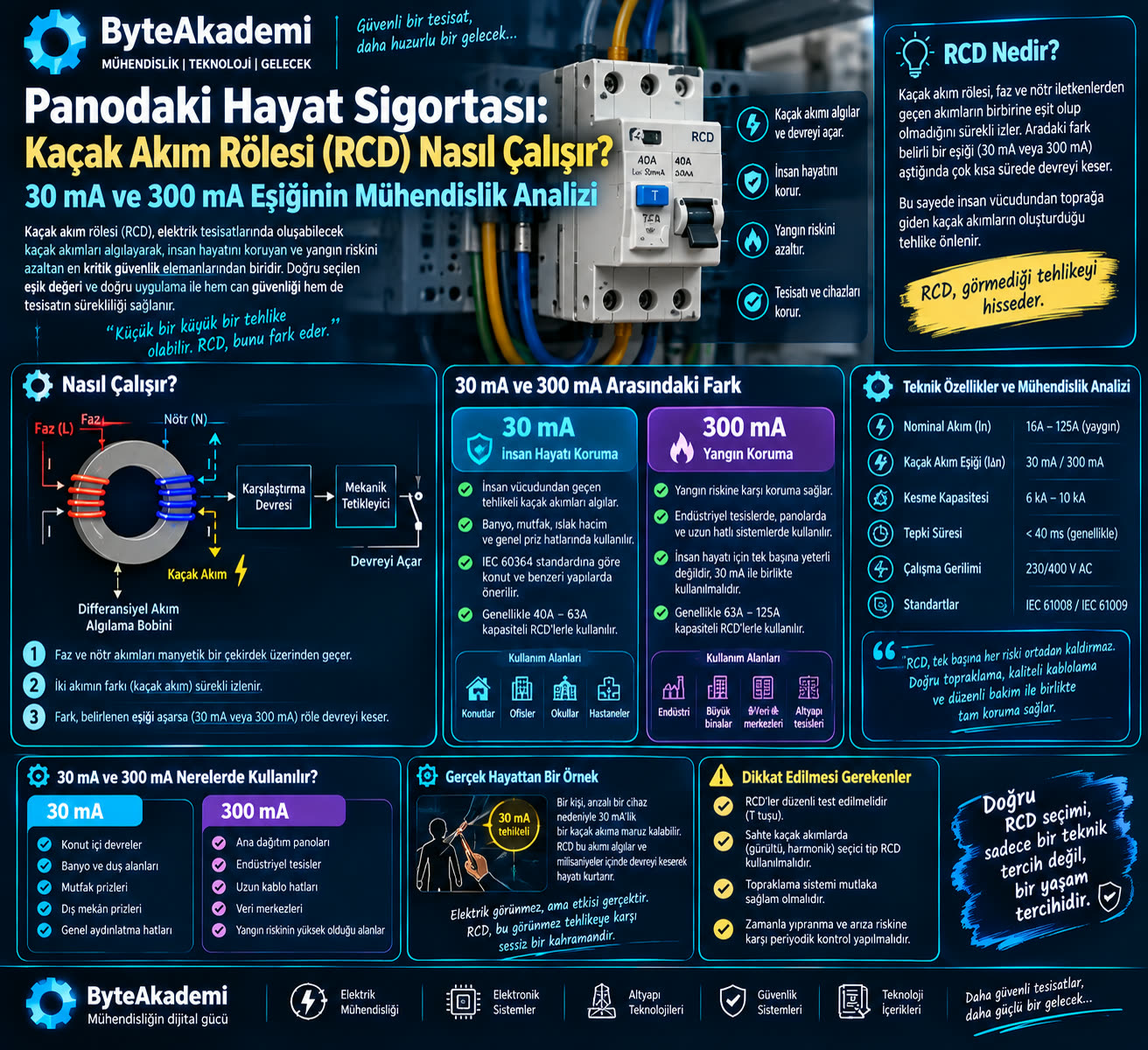
A safety device that watches the difference between line and neutral currents and opens the circuit within a fraction of a second when that difference exceeds a threshold.
// EXPLANATION
The device compares the currents in the line and neutral conductors in a toroidal core. In a healthy circuit they sum to zero; if current leaks to earth or through a person, a difference appears. When it exceeds the rated residual current (for example 30 mA) the device trips. 30 mA devices are chosen for protection of life, 300 mA devices for fire and installation protection. It does not protect against overload or short circuit on its own; a fuse or circuit breaker is still needed.
// ALSO KNOWN AS
RCDresidual current deviceresidual-current deviceGFCI
// RELATED TERMS
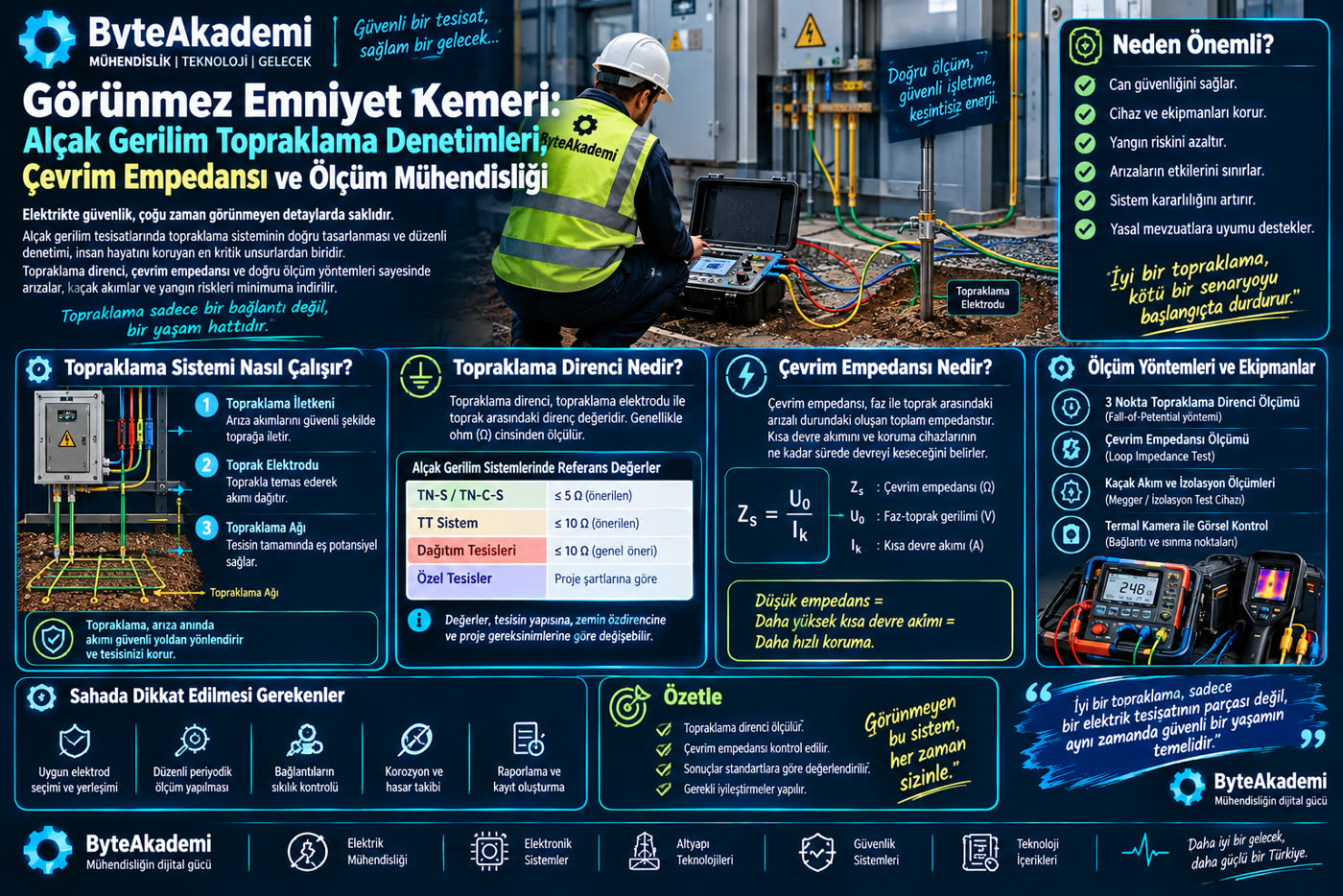
Earthing (grounding)An arrangement that connects the conductive parts of an installation to the ground through a low-resistance path so fault current has a safe way out.
Earth-fault loop impedanceThe total impedance of the path a fault current follows (source, line conductor, protective conductor); it decides whether the protective device will trip in time.
Touch voltageThe voltage that appears between two points a person can touch at the same time (for example hand and foot) during a fault.
TT systemThe source and the consumer have independent earthings; because fault current returns through the ground an RCD is essential.