Consider a modern home console like the PlayStation 5: a 4.5-kilogram chassis, a 350-watt power supply unit, and high-RPM cooling assemblies engineered to exhaust massive thermal dissipation. Contrast that against a 200-gram, fanless, 8-millimeter iPhone. Yet titles engineered natively for high-end consoles—such as Death Stranding, Resident Evil Village, and Assassin's Creed Mirage—run fluidly on pocketable mobile silicon.
This achievement goes far beyond lowering global shadow resolutions. It represents a convergence of nanometer-scale manufacturing, advanced GPU asset compression, Mesh Shading primitive culling, and AI-driven MetalFX temporal reconstruction. This article examines the computational and thermodynamic mechanics enabling massive 80 GB console experiences to execute within mobile form factors.
1. Managing 100 GB Asset Footprints: ASTC Block Compression
Modern AAA games consume massive storage primarily due to high-resolution 4K surface textures. Decoding uncompressed mipmaps into main system memory would instantly overwhelm an iPhone's 8 GB unified memory pool.
Developers overcome this limitation via hardware-native compression pipelines:
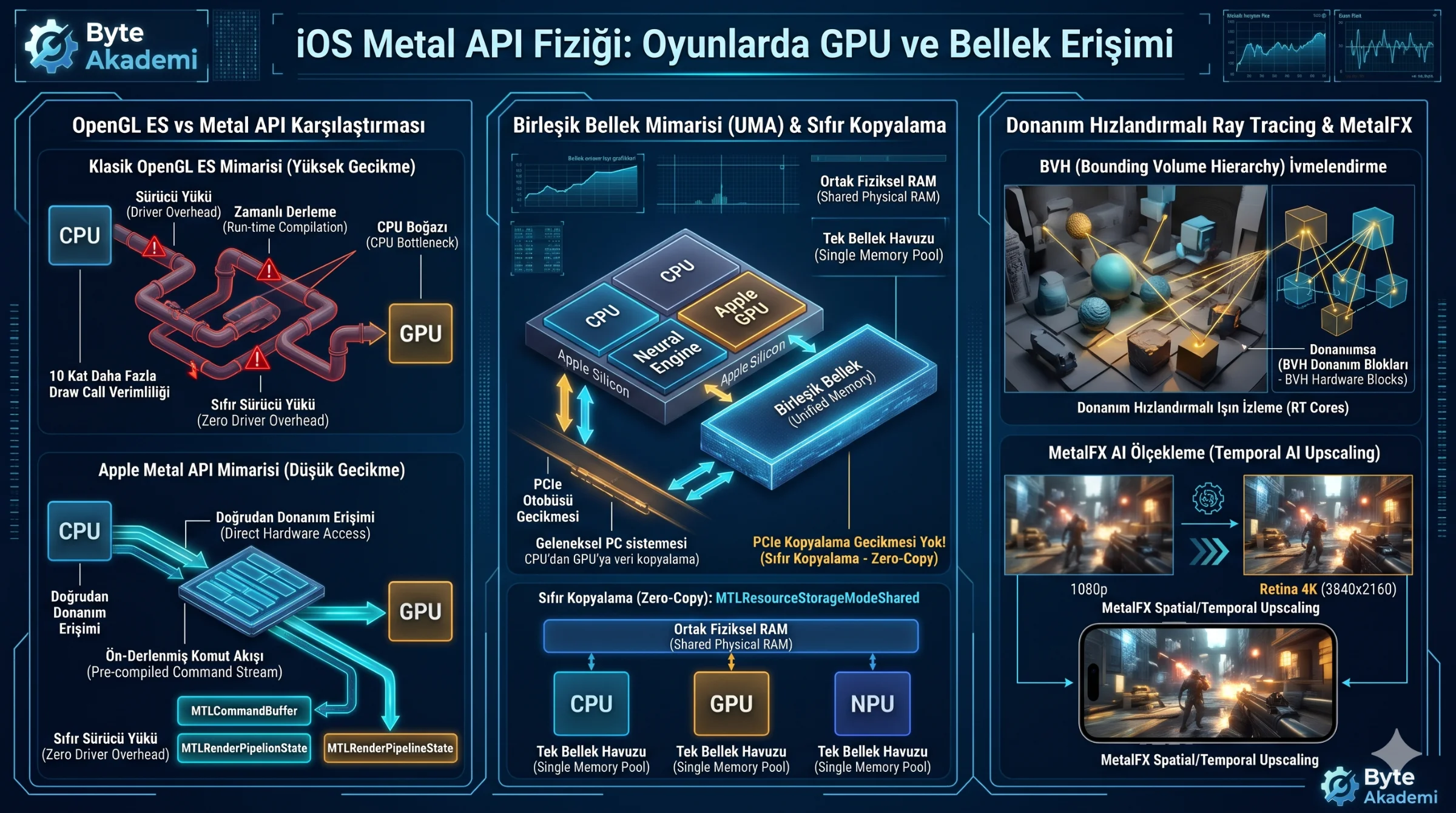
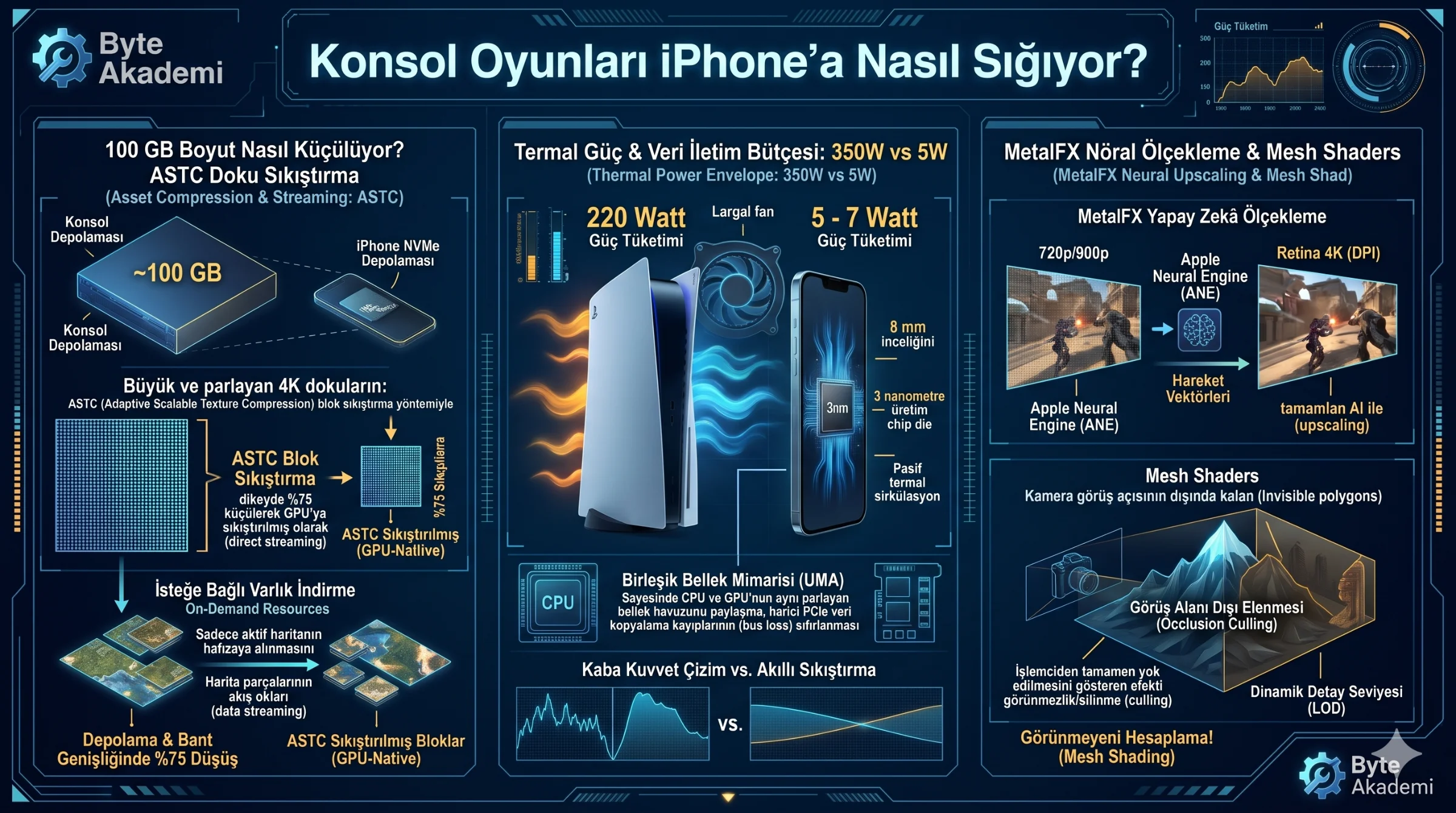
- Adaptive Scalable Texture Compression (ASTC): Unlike desktop formats that require prior unpacking into VRAM buffers, ASTC compresses texture bitmaps into fixed-size hardware blocks. The mobile GPU samples directly from compressed data in memory, slashing memory bus bandwidth demands by up to 75%.
- On-Demand Resource Streaming: Instead of staging a 70 GB universe permanently inside local storage, game engines partition worlds into dynamic asset packs. Only assets immediately relevant to the active scene remain cached in high-speed NVMe storage, purging distant geometry dynamically.
  [CONSOLE MEMORY PIPELINE vs. iPHONE MOBILE PIPELINE]

  Console Path : [100 GB Raw Assets] ---> [High-Power GDDR6 Pool] ---> [200W+ Active Compute]
  iPhone Path  : [ASTC Compressed]  ---> [Zero-Copy Shared UMA]   ---> [5W MetalFX Neural Pipeline]
Fitting a 200-watt home console title into a 5-watt fanless mobile chassis is not a brute-force hardware victory; it is an algorithmic masterclass in neural upscaling and texture compression.
2. MetalFX Upscaling: Neural Pixel Synthesis
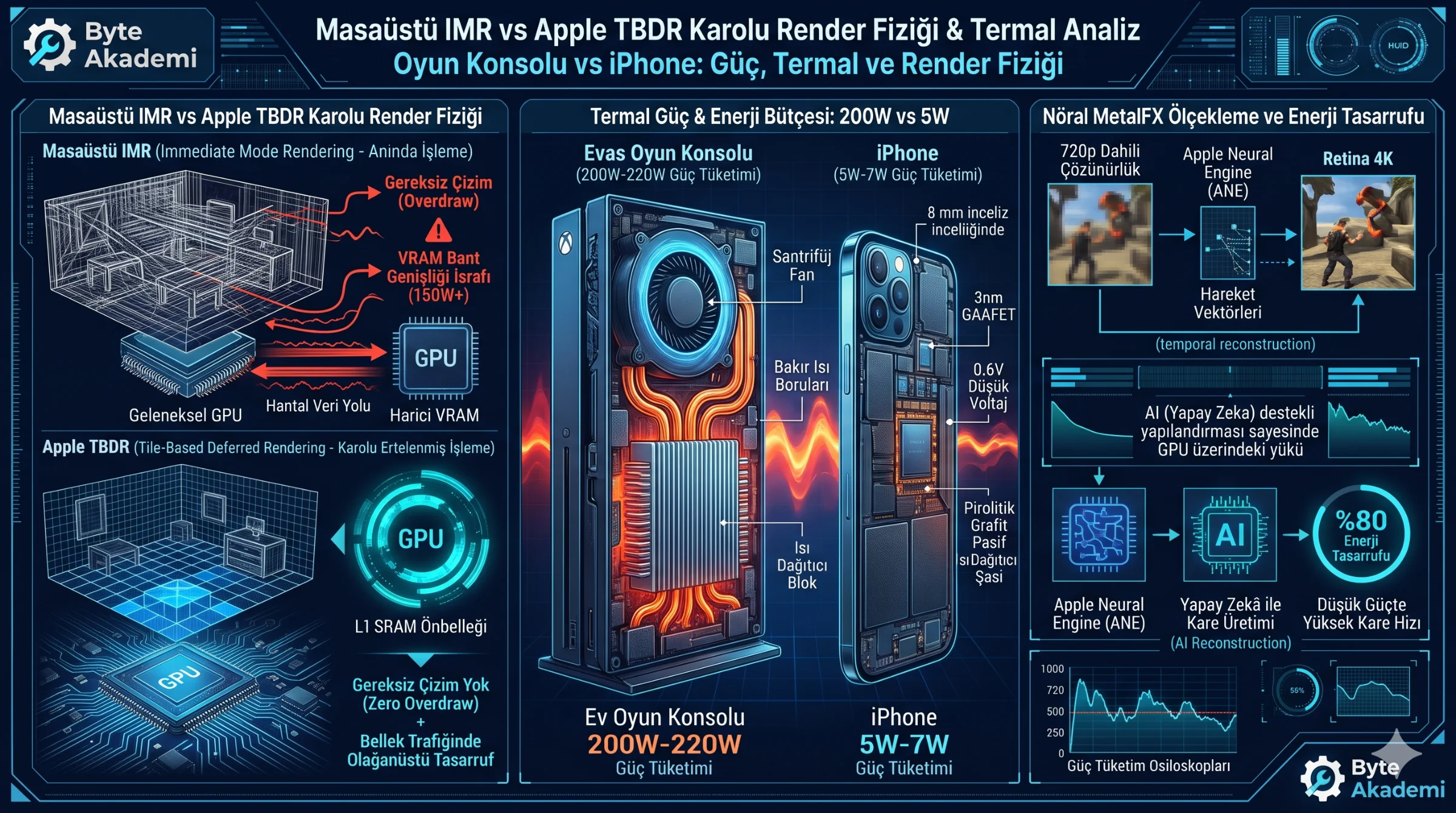
Attempting native Retina-resolution rendering on mobile GPUs induces immediate thermal saturation, causing clocks to throttle within minutes. Apple solves this constraint via MetalFX Upscaling.
Instead of rasterizing scenes at native screen resolutions, the rendering pipeline operates at intermediate resolutions (e.g., 720p or 900p). MetalFX bridges the resolution gap across three phases:
- Temporal Jittering & Motion Vectors: The engine tracks sub-pixel camera offsets and geometric velocity vectors across successive frames.
- Neural Reconstruction: The 16-core Apple Neural Engine (ANE) and specialized GPU shader routines infer edge transitions and sub-pixel details without loading raw pixel passes.
- Synthesized High-DPI Output: Lower-resolution inputs are reconstructed into razor-sharp Retina viewports, allowing the silicon to consume up to 4x less graphics rasterization power while preserving visual fidelity.
3. Eliminating Invisible Workloads: Mesh Shaders
In traditional rendering pipelines, primitives occluded behind mountains or interior walls still consume preliminary vertex processing stages. On mobile silicon, computing non-visible geometry directly degrades battery reserves.
Modern A-Series architectures leverage Mesh Shaders to reorganize geometry processing:
- Hardware Frustum & Occlusion Culling: Geometry outside the camera frustum or fully occluded behind opaque geometry is purged at the primitive stage, preventing invalid draw calls from progressing through the rasterizer.
- Dynamic Level of Detail (LOD): Primitives scale geometric density dynamically based on camera distance, ensuring that distant entities do not saturate memory buses with redundant vertex data.
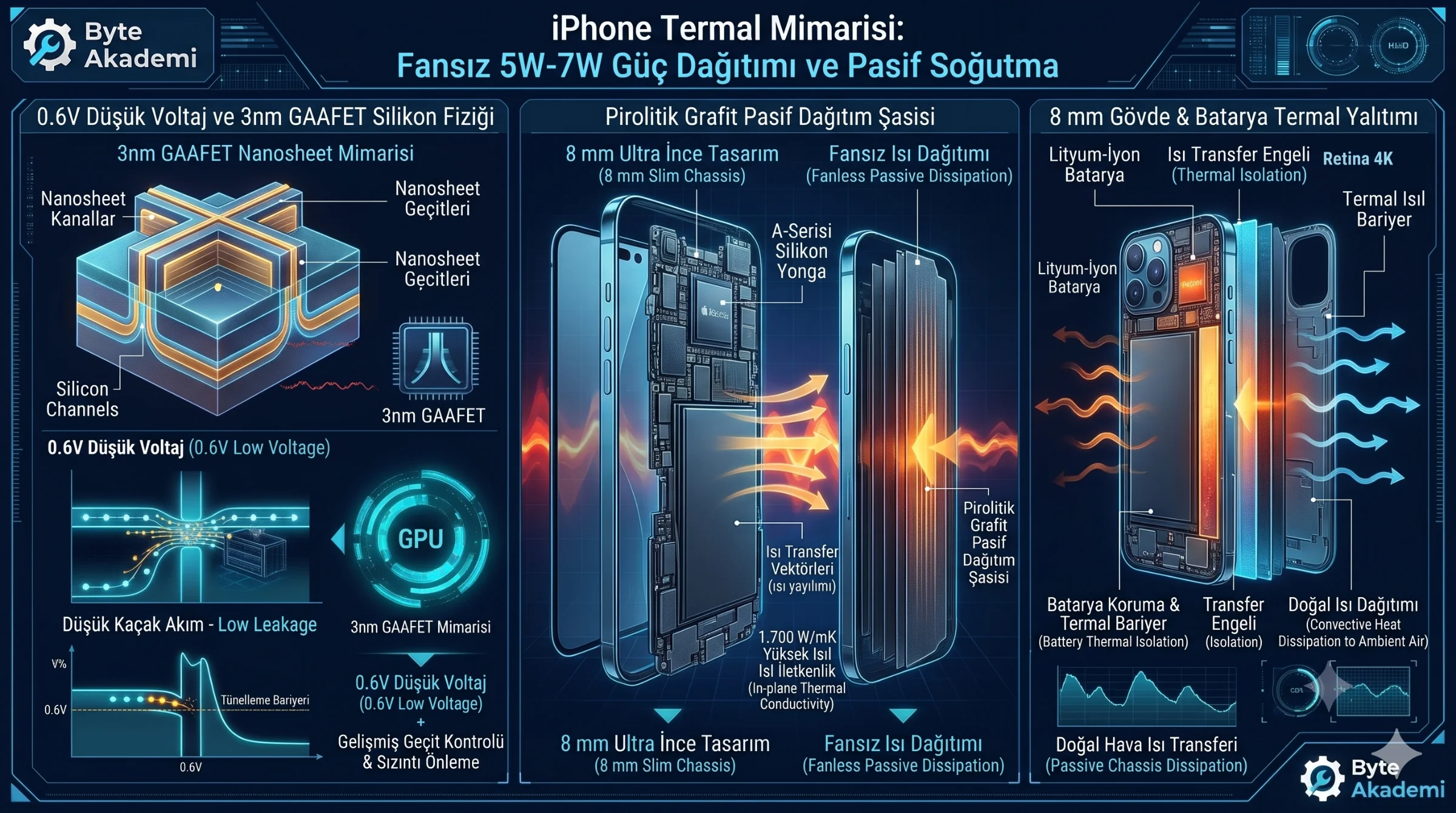
While a console draws 200 to 220 watts directly from a wall outlet, an iPhone executes these complex rendering pipelines within a strict 5 to 7 watt power budget. This dynamic is facilitated by 3nm lithography and the high bus efficiency of Apple's Unified Memory Architecture.