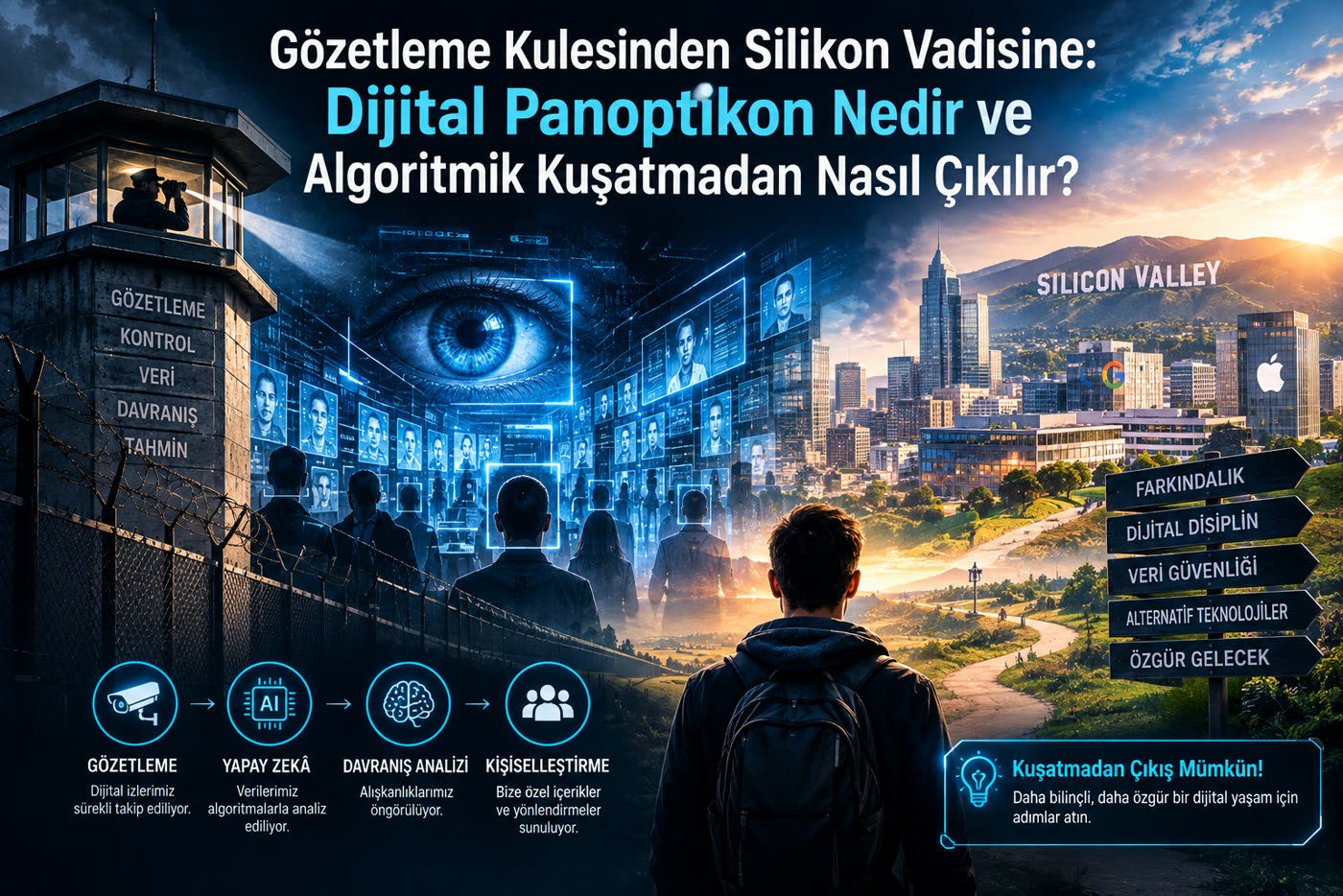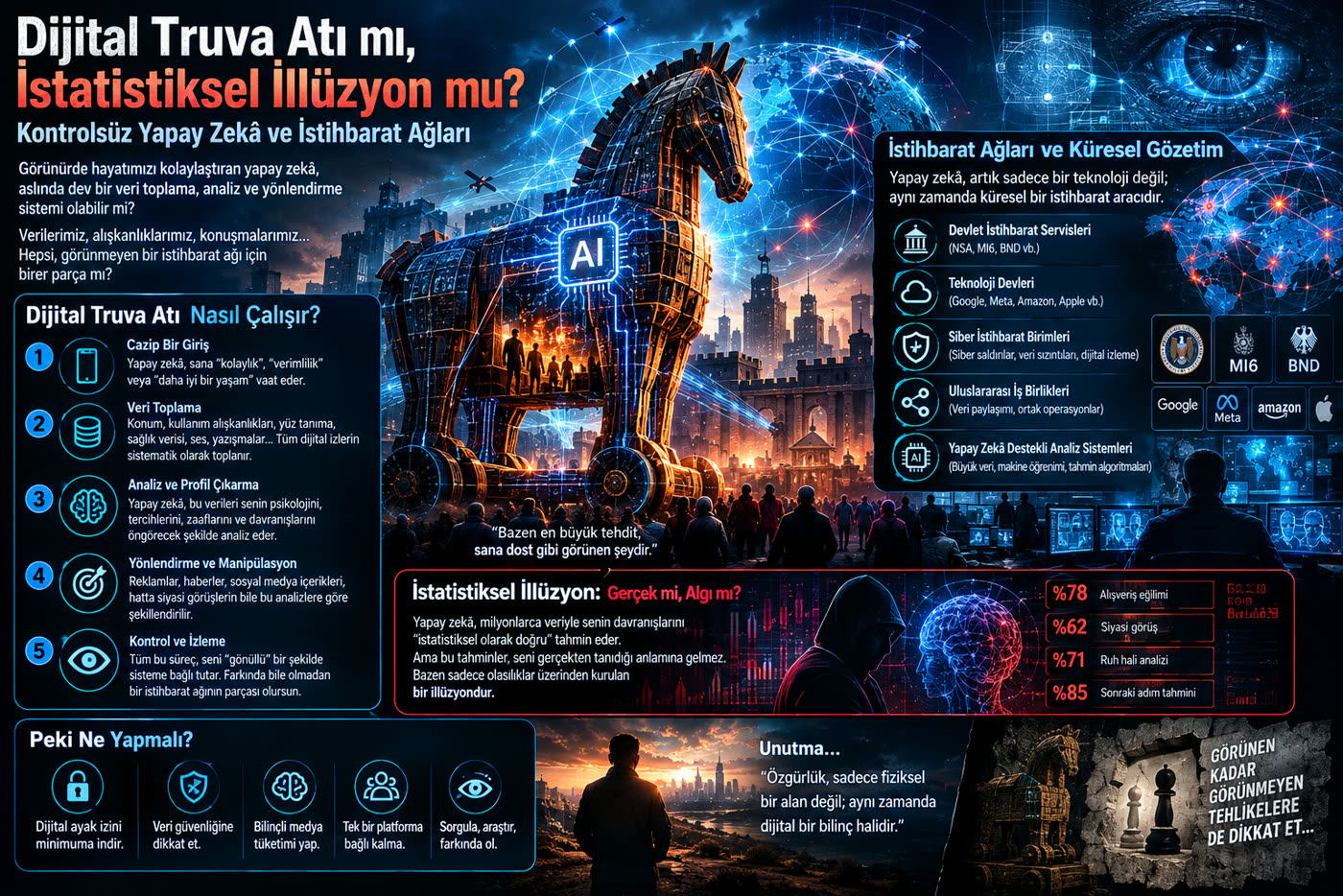
Every day we pour hundreds of lines of data into AI models from our phones, browsers or corporate servers: company balance sheets, code blocks, medical test results, personal dilemmas and legal texts. So are these neural networks with billions of parameters running in the background really neutral digital assistants developed for the good of humanity, or are they the most flawless global open-source intelligence (OSINT) collection mechanism that modern intelligence services have ever built?
While popular culture chooses to caricature this question with the cliché of "killer robots gaining consciousness," a much colder crisis is unfolding on the fronts of engineering, data sovereignty and international law: the algorithmic pacing problem. We examine the unchecked power of Silicon Valley and closed labs, why governments cannot regulate it, and the risk that every input (prompt) we enter could become a geopolitical weapon.
Closed black-box AI models running on centralized servers feed the global data-mining loop with every interaction.
1. Agent or Data Sponge? The Issue Is Not Consciousness, but Allegiance
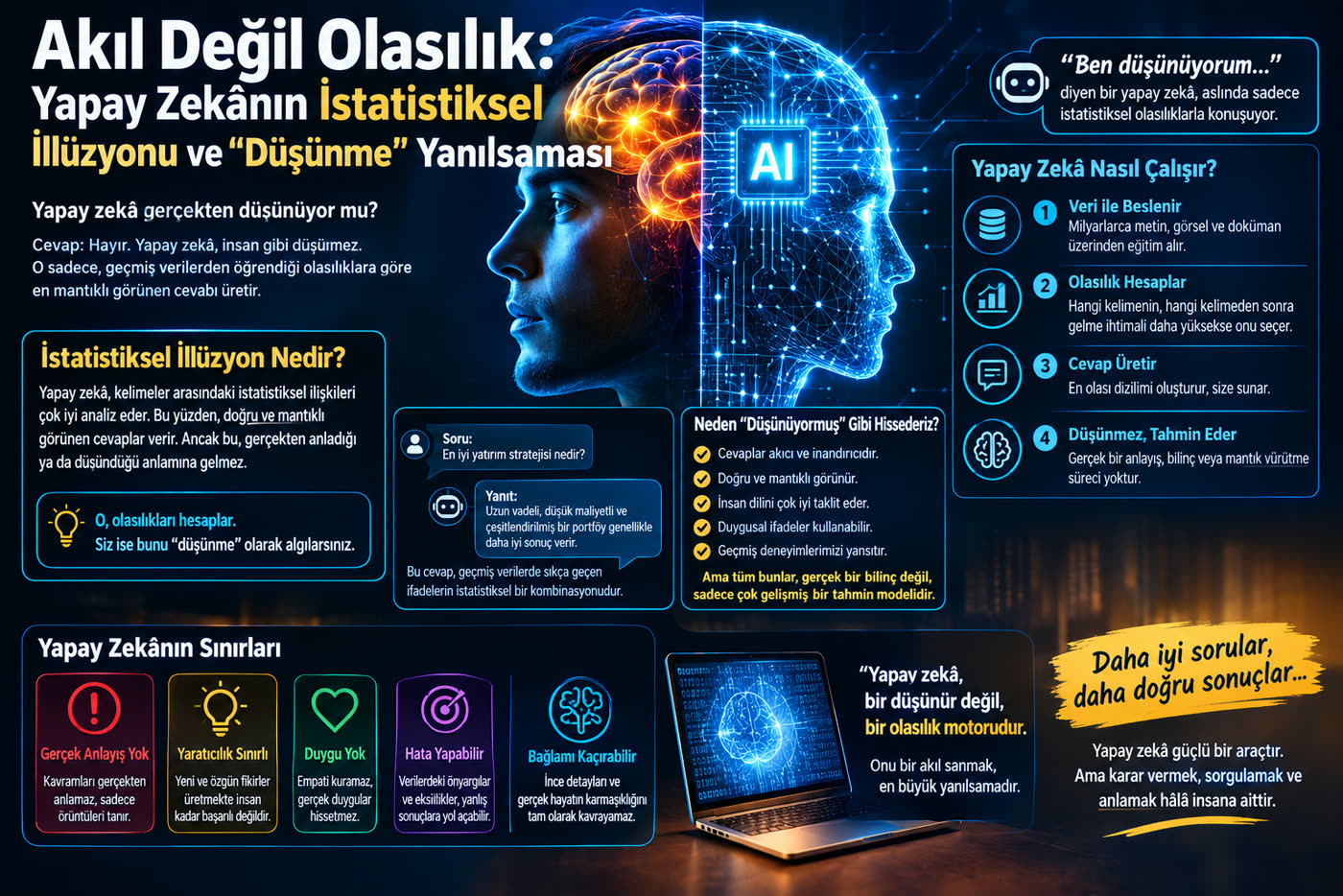
First, a technical distinction needs to be made clear: AI models are not conscious beings with their own goals, hatching plans in secret meetings. They are vast probabilistic mathematical matrices built from trillions of words and tensor multiplications. A model cannot be an "agent"; but it can be turned into the most skillful agent of the companies that train it and the states that oversee its servers.
In traditional espionage, an intelligence service (the CIA, MI6, Mossad and so on) needed years of field operations to reach critical engineering data, psychological profiles of military personnel or software vulnerabilities in a target country. Today, a developer voluntarily pastes their company's proprietary source code, and a researcher pastes a national strategy analysis, into the client window of a centralized LLM server. Stored on centralized servers, this data becomes an unprecedented "passive data-fishing lake" for intelligence analysts.
2. The "Pacing Problem": Why Do Laws Lag Behind Silicon?
Governments falling behind on oversight is less a matter of negligence than of a structural dead end known in legal theory as the "pacing problem":
- Exponential Technology vs. Linear Bureaucracy: Training an AI architecture and releasing it for general use takes 3-6 months, while it takes parliaments 3 to 5 years to form committees, draft a bill and pass it. By the day the law comes into force, the model it was meant to regulate is already obsolete.
- The Geopolitical Dilemma (FOMO Syndrome): If a state (for example, the EU countries) imposes very strict regulations on AI models (the EU AI Act), local tech capital flees and the country falls behind in the global power race. Powers such as China or the US deliberately keep the pace of regulation in check, aiming to secure hardware and model superiority first.
- The Black-Box Problem: In a system where even engineers cannot fully explain the moment a decision is made among billions of weights, it is technically impossible for bureaucrats to know what to audit.
Traditional Intelligence vs. Algorithmic AI Surveillance
| Vector | Classic Digital Intelligence | The Age of Centralized LLMs / AI |
|---|---|---|
| Method of Data Collection | Cyber intrusion, spyware (Pegasus, etc.) | Users entering prompts of their own free will |
| Scale of Data | Targeted, fragmented and costly | The cognitive and technical output of billions of people |
| Risk of Manipulation | Bot accounts and fake social media networks | Algorithmic hallucination and biased model training |
| Detectability | Leaves packet traces in network traffic | Hidden behind entirely legal terms of service |
3. Defense Doctrine: Why Local (On-Device) and Open Source?
With governments' oversight capacity this slow, there is only one way to ensure individual and corporate security: pull the data out of the cloud.
This is exactly why the hardware security chips such as Samsung Knox Vault and the on-device NPU optimizations we detailed in earlier reviews are vital. When a model runs on local silicon, no secret service or tech monopoly can reach your data the moment you cut the internet connection. The cyber sovereignty of the future will be shaped not by "giant models" running on someone else's servers, but by independent AI architectures running securely in our pockets or on our local servers.
What is the most critical data you have ever given to an AI? Do you believe governments can regulate these giants, or is the shift to local (offline) AI inevitable? Let's discuss the strategic analysis in the comments!