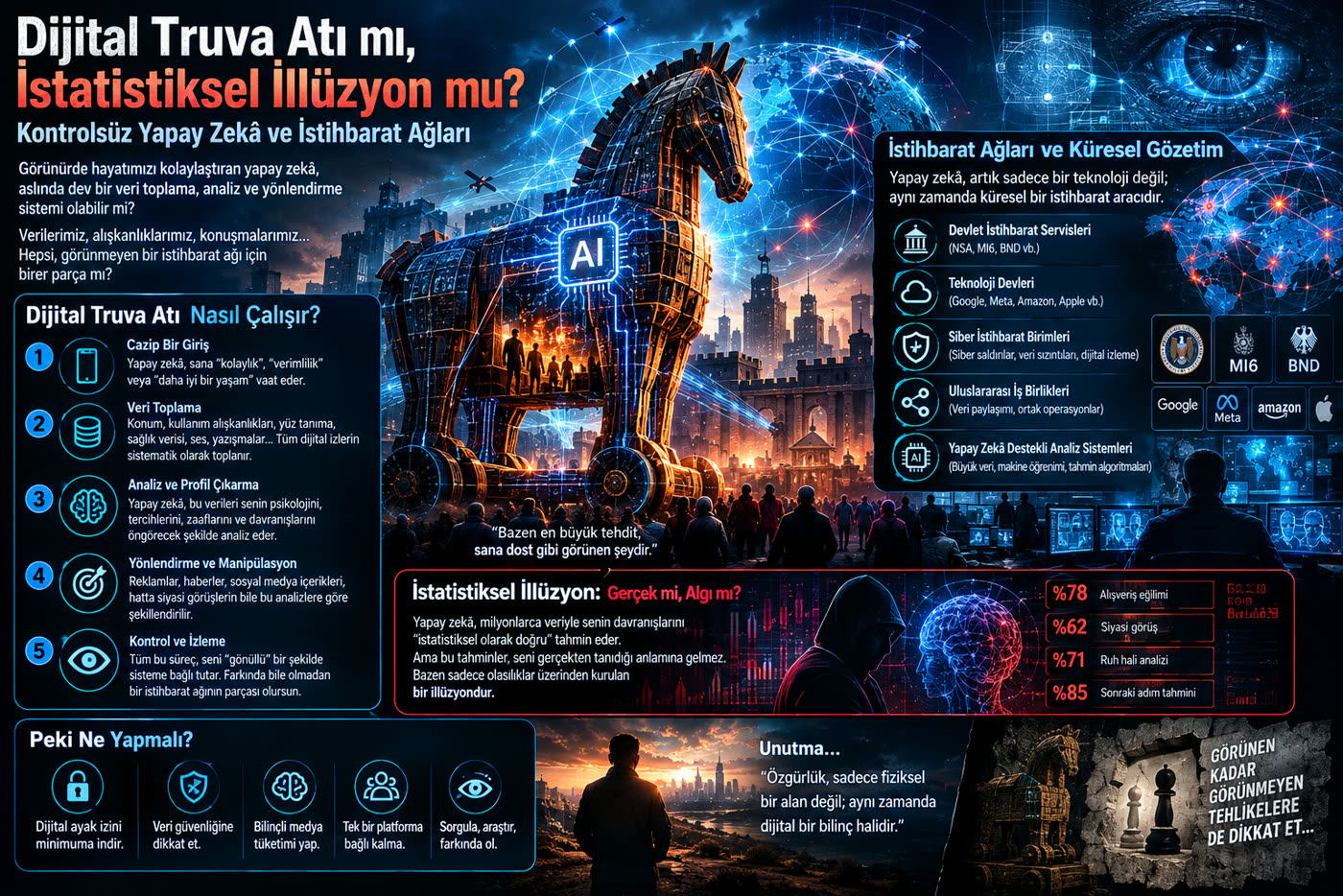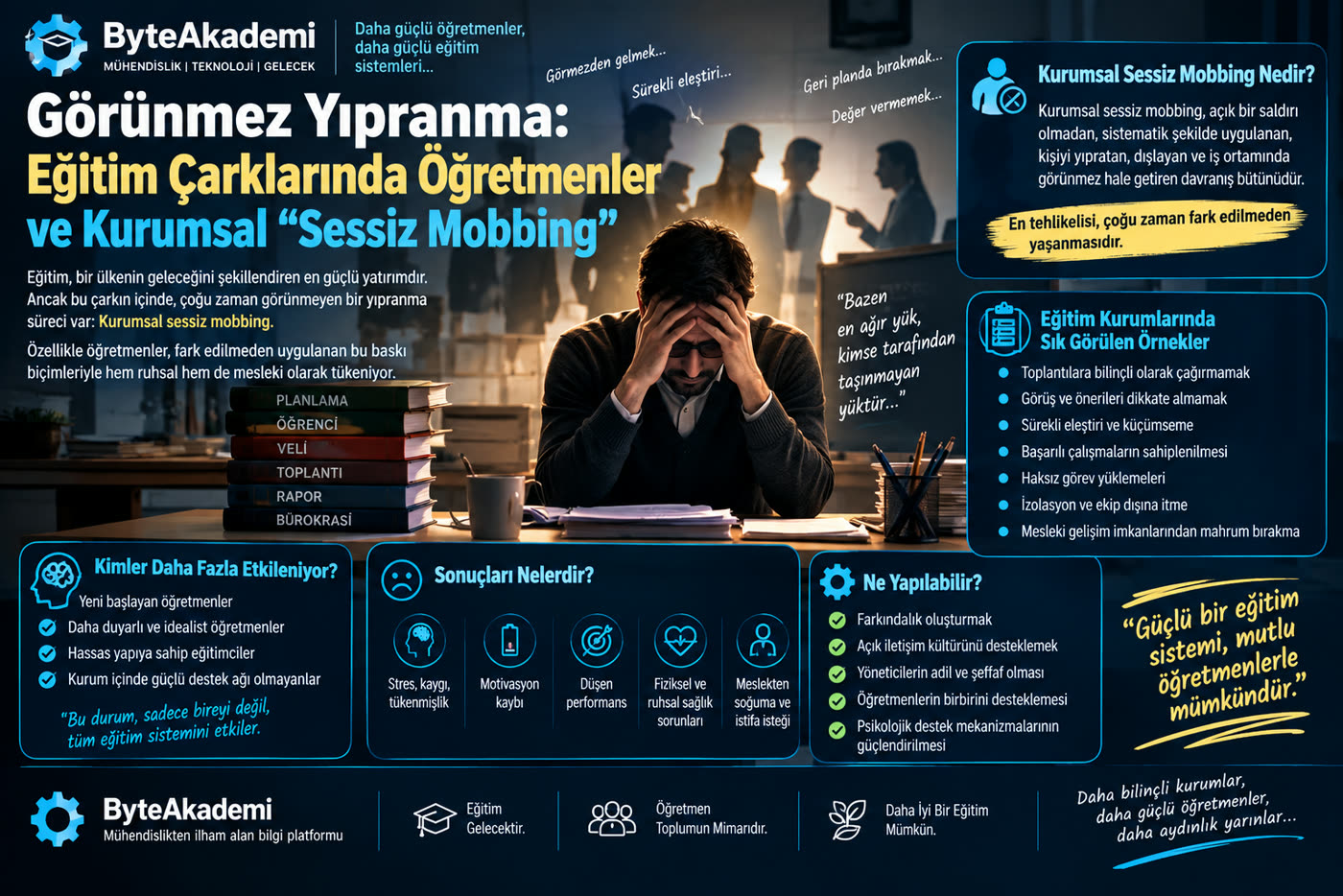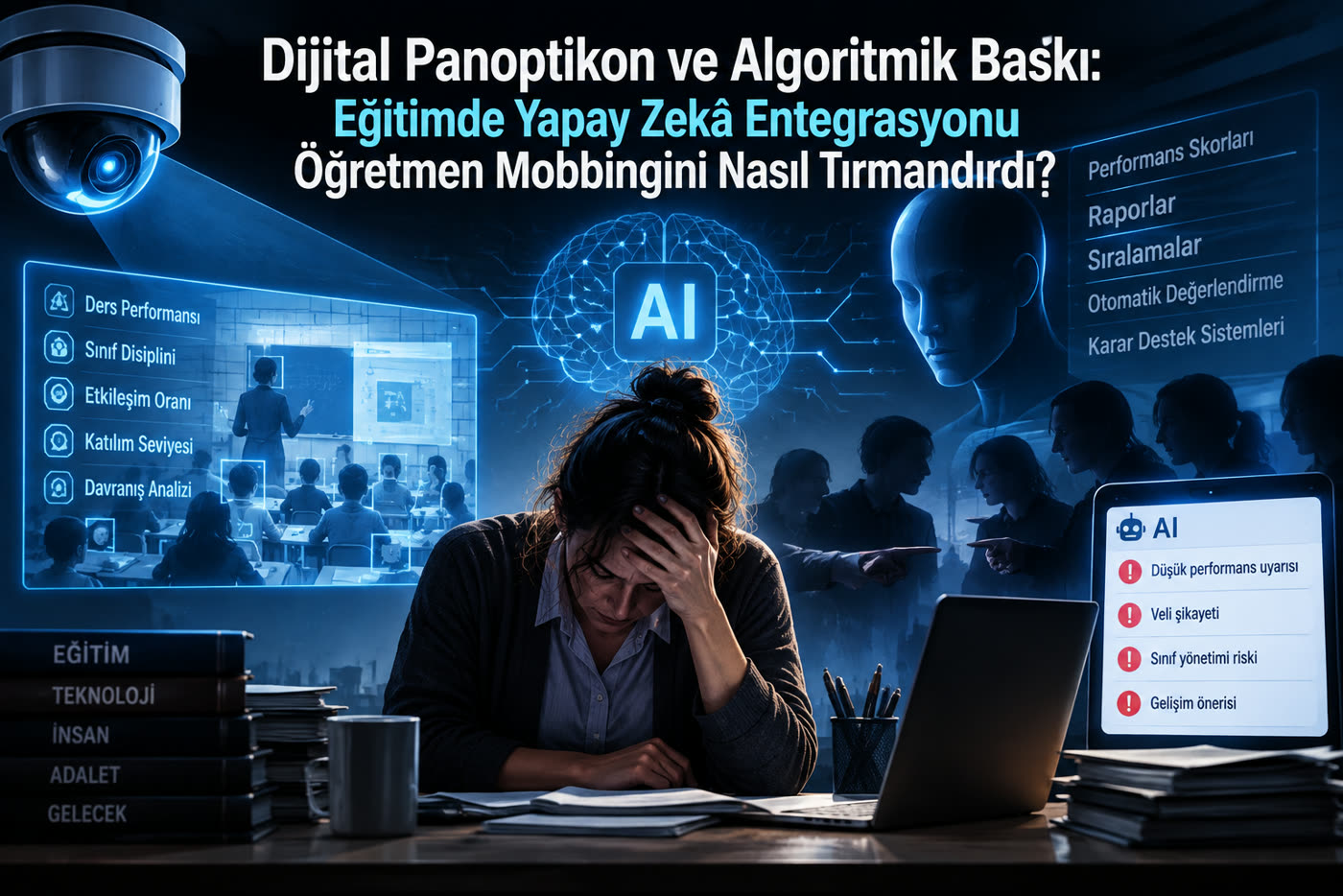
As a systems and electrical-electronics engineer, our fundamental rule when designing industrial automation lines is this: "A sensor or control loop is installed to increase the line's throughput, not to burn out the motor that drives it." Yet the AI tools that have recently been dumped into educational institutions without any oversight have, rather than sparking a pedagogical revolution, turned into an algorithmic mobbing mechanism in the hands of school administrations, one that monitors, scores and pressures teachers around the clock.
Administrations using the "AI-powered school" label as a marketing argument have turned every parameter into a stick for oversight: from requiring lesson plans to be approved by AI, to in-class audio and camera analysis, from response times to parent messages to AI-based performance scores. The teacher's experience, intuition and human touch are being crushed under cold statistical matrices of a few hundred parameters.
Instead of supporting pedagogy, AI metrics are turning educators into constantly monitored data entry operators.
1. The Goodhart's Law Failure: When a Measure Becomes a Target, It Loses Its Meaning
There is a very basic principle in engineering and economic theory: Goodhart's Law. The moment a measure becomes a target, it ceases to be a good measure. This is exactly what is happening in educational institutions.
Under the banner of AI integration, administrations are imposing AI portal usage quotas on teachers: "At least 10 AI-assisted assignments must be created per week," "Exam analyses must be uploaded to the AI bot and reported within 24 hours," "Parent questions must be answered instantly using AI drafts." The eye contact a teacher makes with a child in class, or their ability to resolve a trauma in the classroom, is ignored because it cannot be measured; meanwhile, the number of data entries made into the system becomes the teacher's sole criterion of merit. Teachers who cannot keep up with this data are then subjected to mobbing, branded as "resistant to technology" or "inadequate."
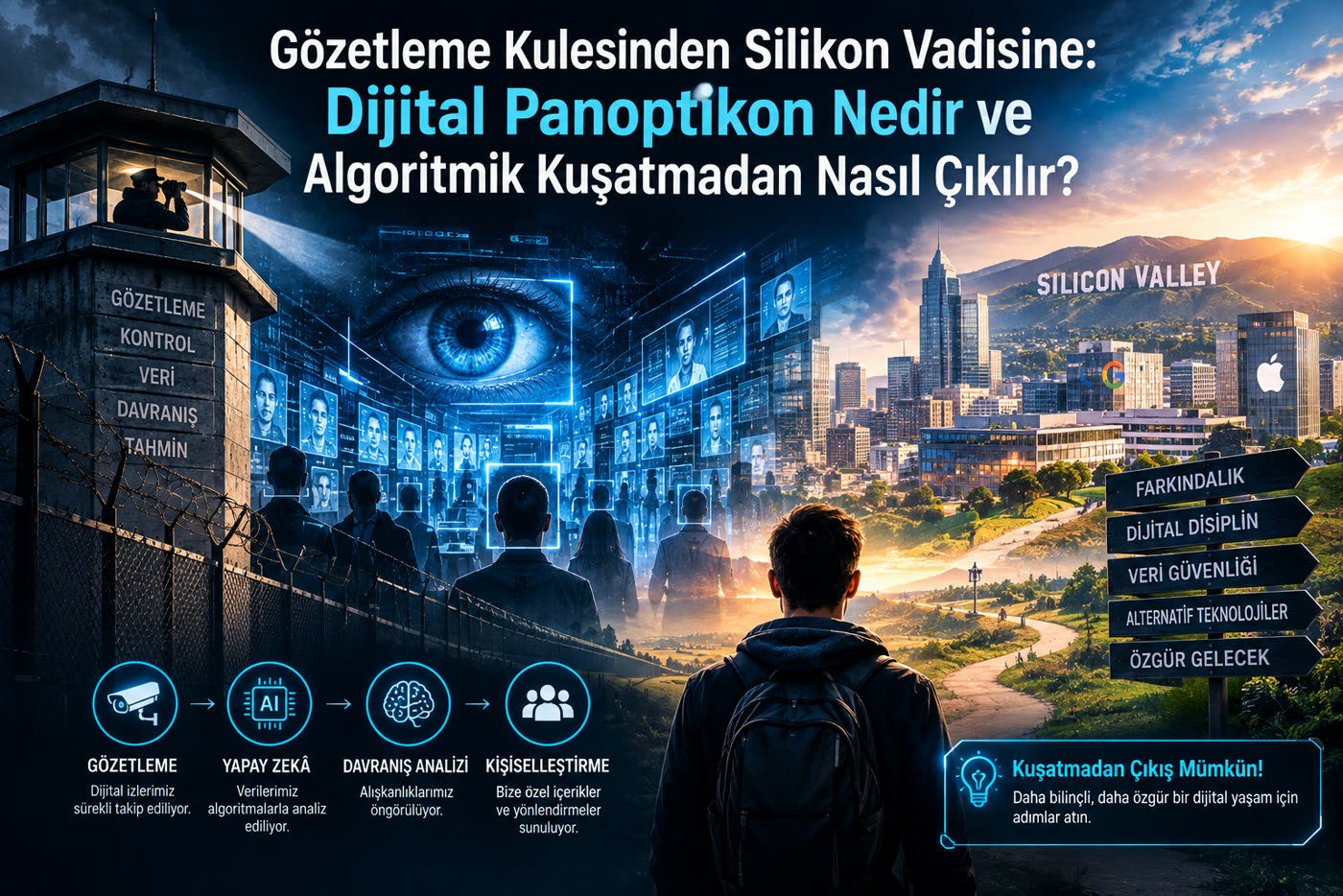
2. The Digital Panopticon: Constant Surveillance and the Seizure of Pedagogical Agency
In the "Panopticon" prison designed by philosopher Jeremy Bentham, inmates did not know when the guard in the watchtower was watching them, so they had to behave as if they were being watched at every moment. Unchecked automation in educational technology has built a modern digital panopticon for teachers:
- The Algorithmization of Parental Pressure: Through AI-powered school portals, parents track every grade, assignment and activity the teacher enters into the system minute by minute, and question the teacher with superficial statistics generated by bots.
- The Destruction of Pedagogical Autonomy: Teachers are stripped of the flexibility to change the flow of a lesson according to what is happening in the classroom at that moment. Automated system alerts such as "You are 12% behind the AI-recommended weekly curriculum outcomes chart" are turned by administrators directly into tools for formal warnings and mobbing.
- Uninterrupted 24/7 Telemetry: How long smart boards stay on, tablet synchronization data and mouse movements on LMS platforms are logged in the background, becoming an invisible digital whip over the teacher.
Real Pedagogy vs. Algorithmic Mobbing Criteria
| Area of Evaluation | Ideal Pedagogical Approach | A System Under AI Mobbing |
|---|---|---|
| Measure of Success | The student's depth of understanding and curiosity | The quota of AI tests and quizzes entered into the system |
| Tolerance for Mistakes | Trial and error and a personal learning process | An instant administrative warning at any algorithmic deviation |
| Working Hours | Focused on the classroom, respectful of rest | Data entry that continues at home through bot notifications |
| The Teacher's Role | Guide, source of inspiration and mentor | A subcontractor feeding data to the AI engine |
3. The Engineering Prescription: Keeping Humans in the Loop (Human-in-the-Loop)
As I emphasized in my earlier analysis of the statistical illusion of artificial intelligence, artificial neural networks cannot comprehend meaning, ethics or pedagogy. Placing an AI in the position of decision-maker instead of the teacher, or of an inspector supervising the teacher, is a design flaw from an engineering standpoint.
A properly designed AI integration should take the burden of administrative paperwork and formalities off the teacher's shoulders; it should work to save the teacher time, not to watch them. AI must be a helpful hand tool on the teacher's workbench, not a watchtower. Otherwise, schools will stop being nurturing homes that inspire students and turn into factories of burned-out people trying to hit algorithmic targets.
As a teacher, do you feel performance pressure at your school through AI or portal usage? Where do you think the limits of technology in education should be drawn? Share your experiences in the comments!