The most common misconception users have about modern smartphone security is that software encryption (Android kernel-level locks) is an impregnable fortress. In reality, once an attacker has physical possession of the device, every line of defence at the operating system level can be bypassed. Millivolt-level voltage manipulation applied to the chip's pins (glitching), laser pulses or memory-freezing techniques can disable the operating system's control mechanisms.
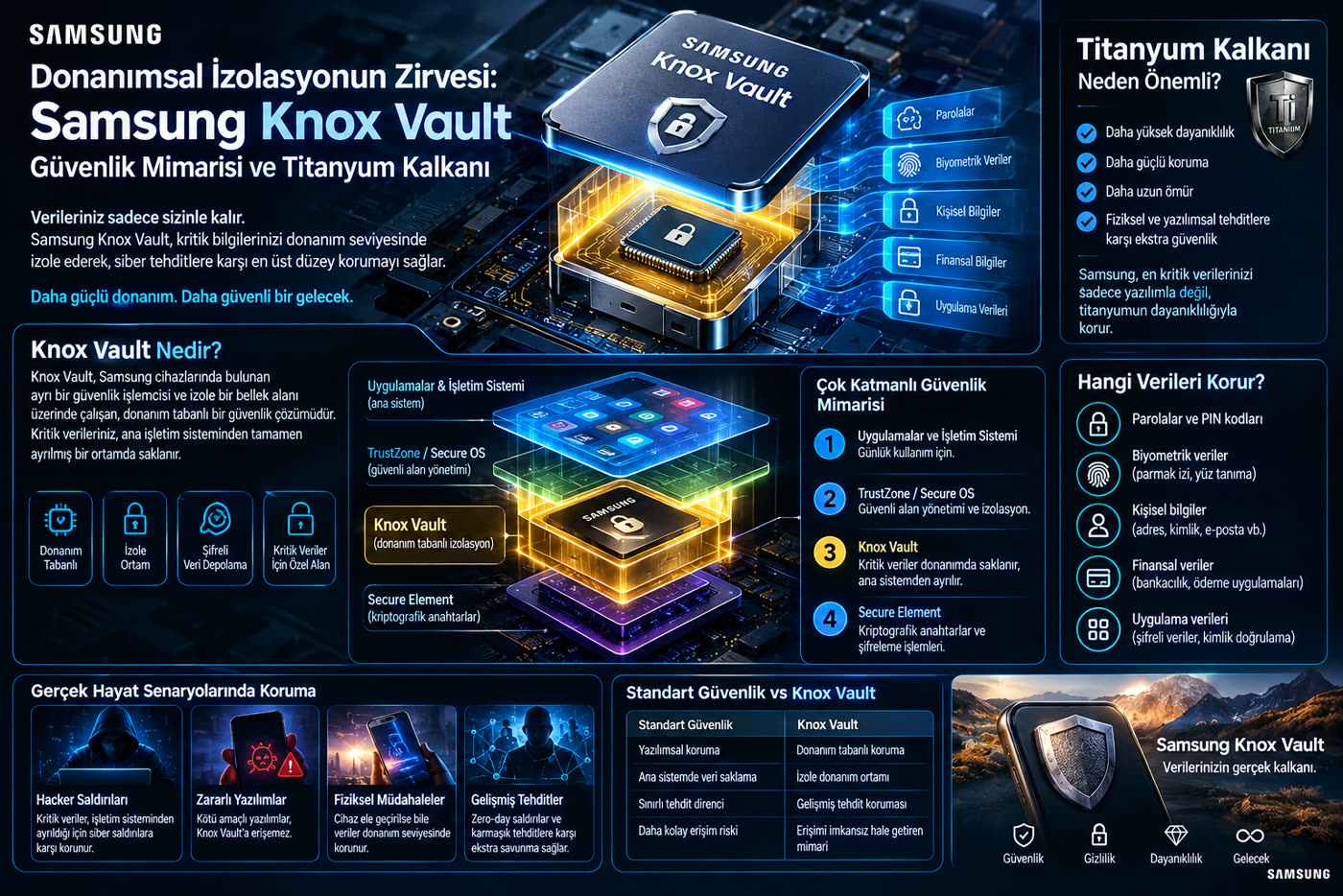
Against these physical and electrical attack vectors, Samsung has developed a hardware topology rarely seen in the mobile world: Samsung Knox Vault. Running completely independently of the main chipset (SoC), this structure locks biometric data, cryptographic keys and PIN codes inside a physical vault at the silicon level.
Knox Vault consists of an independent processor and a Secure Memory block, electrically and logically isolated from the main processor.
1. Why Did Traditional ARM TrustZone Fall Short?
For years, smartphone security relied on the logical separation in the ARM architecture called TrustZone. TrustZone splits the main CPU cores in software into a "Secure World" and a "Normal World" (Non-Secure World). But there is a critical engineering weakness here: Shared Hardware Resources.
Both worlds share the same physical RAM, the same system bus and the same cache. This paves the way for side-channel attacks such as Spectre or Meltdown. By analysing cache timings or power fluctuations, an attacker can read encryption keys indirectly. Knox Vault cuts this sharing off at the root and builds a completely independent second piece of hardware.
2. Knox Vault Hardware Components: Inside the Vault
Knox Vault is made up of two critical silicon modules that sit on the board like an independent island:
A low-power microcontroller that runs independently of the main application processor (SoC). It is dedicated solely to cryptographic algorithm computations (AES, RSA, ECC) and authentication checks. Even if the Android operating system crashes or is taken over with root access, this processor's instruction set cannot be tampered with.
B. Secure Isolated Memory (Secure Memory)An independent non-volatile memory module, separated by physical data paths from system RAM (LPDDR5X) and from storage (UFS). The user's lock screen PIN, the mathematical fingerprint templates and Samsung Blockchain keys are stored only here. Because there is no external data bus, the memory cannot be scanned directly.
Architecture Comparison: TrustZone vs. Knox Vault
| Security Parameter | Traditional ARM TrustZone | Samsung Knox Vault |
|---|---|---|
| Isolation Level | Software / Logical | Full Physical Hardware Isolation |
| Memory Architecture | Shared System RAM | Independent Secure Memory (SRAM/EEPROM) |
| Certification Standard | Basic CC Standards | EAL5+ (High-Level Common Criteria) |
| Physical Tamper Protection | Unprotected / Vulnerable | Active Sensors (Voltage, Temperature, Laser Shield) |
3. A Shield Against Physical Lab Attacks
The key element that earns Knox Vault its EAL5+ (Evaluation Assurance Level 5+) certification is its active hardware sensors, which can detect lab-grade physical intrusion attempts:
- Voltage and Glitch Detectors: The moment voltage fluctuations are detected that suddenly drop the chip's operating voltage to force the processor into errors (fault injection), the hardware locks itself.
- Laser and Light Shield: If the chip package is physically breached and microscopic laser pulses are fired at the silicon, photodiode sensors detect the light and destroy the cryptographic keys.
- Extreme Temperature Sensors: Against freezing attacks with liquid nitrogen, which aim to stop the data in memory from fading, the system wipes the data instantly (zero-fill) as soon as a thermal threshold is crossed.
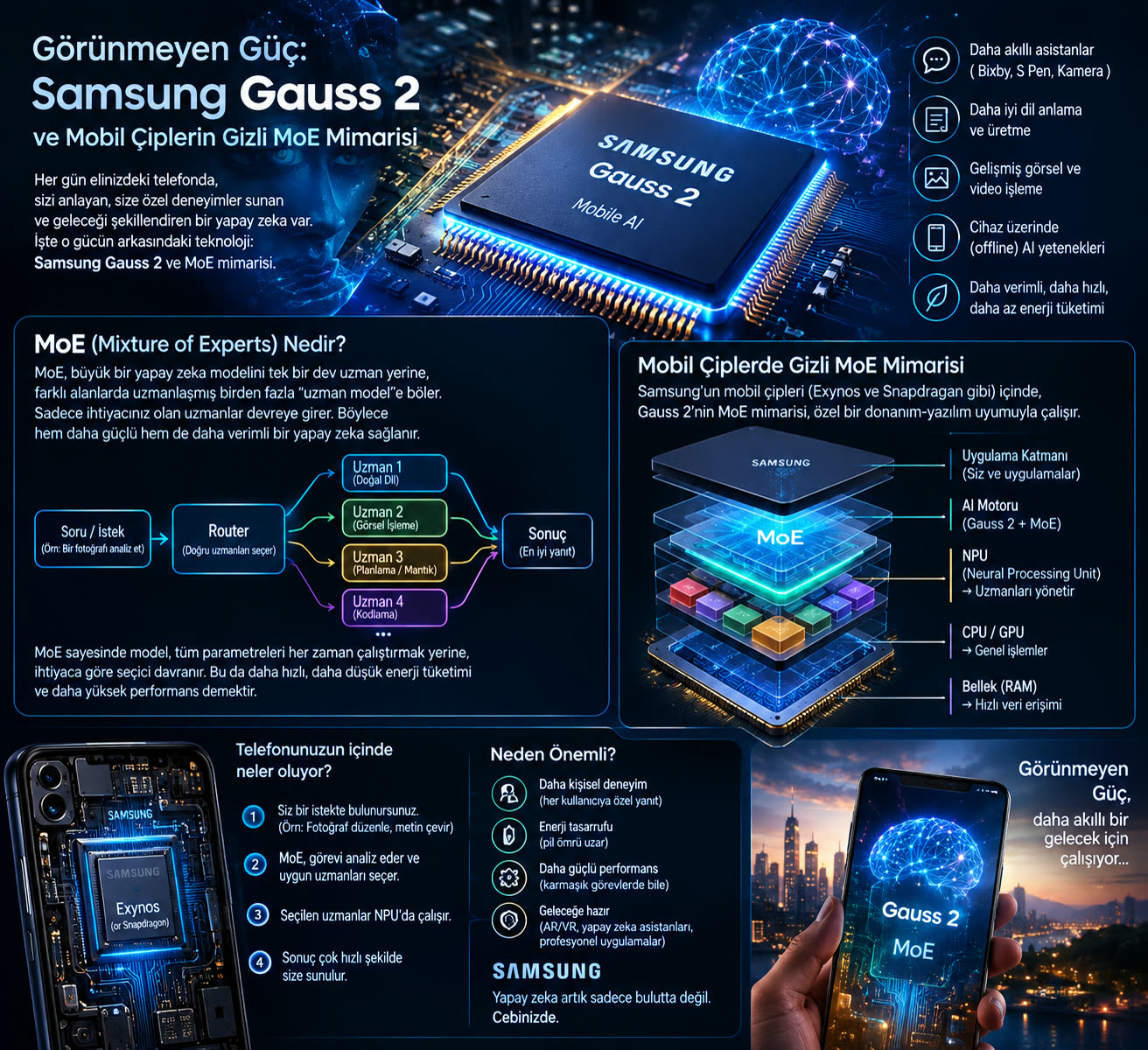
As we mentioned in our previous article on Samsung Gauss 2 and its NPU inference architecture, in the age of on-device AI it is not enough for user data simply to stay on the device. The hardware where that data is processed must also be protected by a shield isolated at the electrical level, like Knox Vault.
How decisive do you think EAL5+ hardware security chips are when choosing a smartphone? How much confidence does it give you that your data is locked in a physical vault? Let's talk engineering details in the comments!