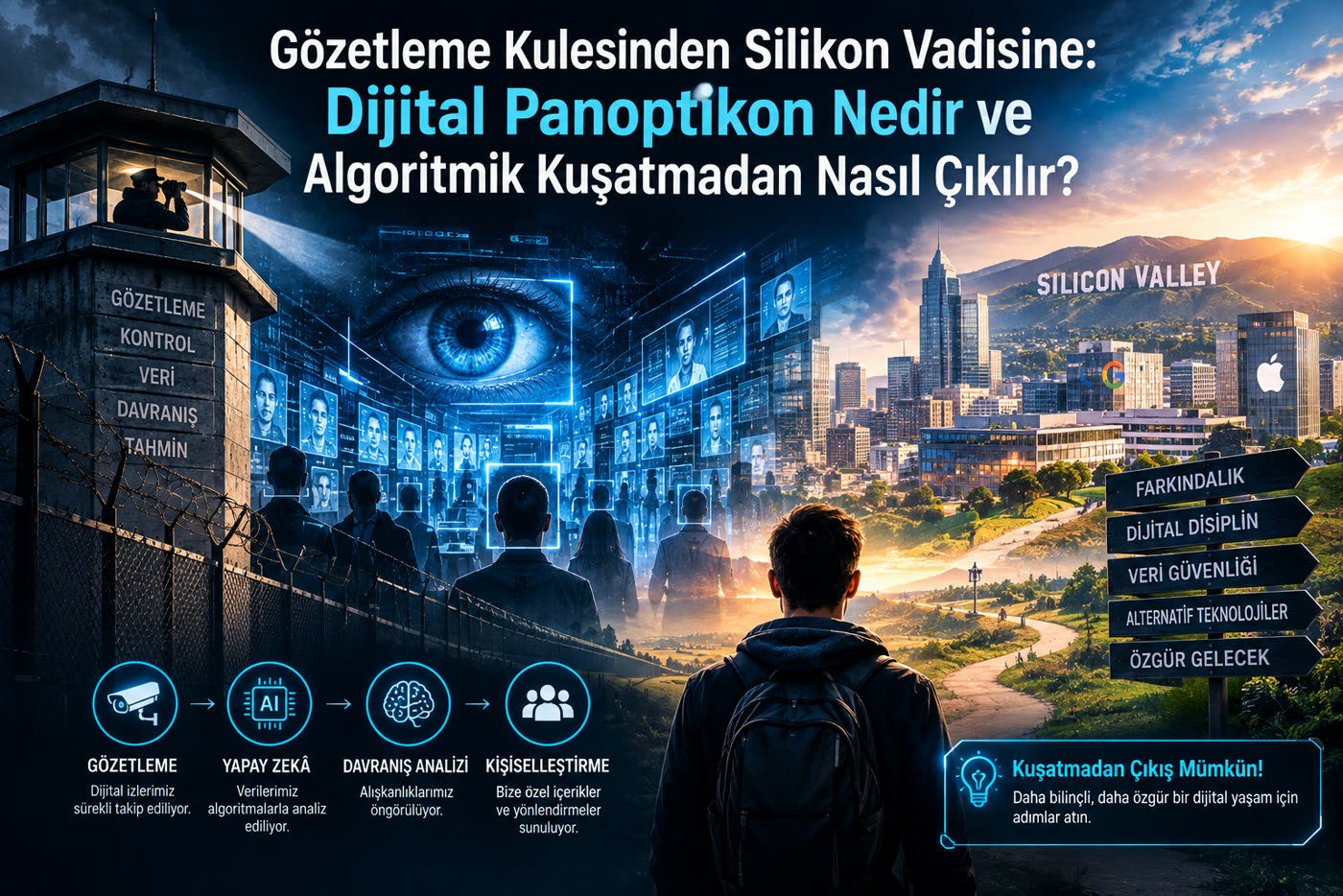
As an electrical and electronics engineer, when I open up network analyzers and examine data packets, telemetry streams and the socket connections running silently in the background, the picture I see is very clear: today's internet architecture is optimized far less for accessing information than for profiling users and keeping them under constant surveillance. The Panopticon prison, designed by English philosopher Jeremy Bentham in the 18th century and turned into a philosophical metaphor of power by Michel Foucault, is no longer made of stone walls, iron bars and a watchtower in the middle. The Panopticon now lives in the silicon chips in our pockets, in cell towers and in the cold aisles of data centers.
In Bentham's design, the inmates could not see whether a guard was in the central tower, but feeling as if they were being watched at every moment, they disciplined their own behavior. In the age of the Digital Panopticon, things are far more sophisticated: we are no longer even aware that we are being watched; in fact, we buy every sensor, camera and microphone needed to run this surveillance machine with our own money and give them pride of place in our homes. So how did modern humans walk step by step into this algorithmic cage, and is it technically possible to break the siege?
The modern digital panopticon: an algorithmic surveillance network in which user data is continuously mapped through telemetry, cookies and hardware trackers.
1. How Did We Get Here? The 3 Stages of Voluntary Captivity
No society was forced into a surveillance mechanism. The digital panopticon was woven step by step through users' pursuit of convenience and clever engineering tricks:
- Surveillance Capitalism and the "Free" Illusion: When search engines, email services and social networks opened their doors for free, the business model quietly changed: "If you are not paying for the product, your behavioral data is the real product being sold." Every click a user made, every second they paused and every keystroke was funneled into massive pools of behavioral surplus.
- Security Sacrificed for User Experience (UX): Conveniences such as pressing "Sign in with Google" to avoid remembering passwords, sharing your location with a single tap and letting a map app automatically plot your home-to-work route led individuals to generate telemetry data of their own free will.
- Hardware Fingerprinting: We are in a technological phase where clearing cookies or switching to a private tab no longer prevents tracking. The way your browser renders through the GPU (Canvas/WebGL fingerprinting), the device's battery level sensor, screen resolution and installed fonts combine to assign you a digital ID number that is unique in the world.
Bentham's Panopticon vs. the Digital Panopticon
| Feature | Classic Panopticon (1791) | Digital Panopticon (2026) |
|---|---|---|
| Means of Surveillance | Central watchtower and guard | AI algorithms, telemetry and sensors |
| The Individual's Stance | Physical coercion and open oppression | Voluntary participation, data sharing and consent |
| Limits of Surveillance | Confined to the prison walls | Independent of place, uninterrupted 24/7 connectivity |
| Core Outcome | Bodily obedience and passivity | Consumption steering and algorithmic manipulation |
2. What Should Be Done? Defense Protocols from an Engineer's Perspective
Throwing technology away entirely and retreating to a cave is not a realistic way to escape this dystopia. The solution lies in reclaiming digital sovereignty with engineering discipline:
The apps on your devices fire data packets at analytics servers in the background even when you are not using them. Installing a Pi-hole at your home network's router or using encrypted NextDNS / DoH (DNS over HTTPS) profiles sinkholes known tracking and telemetry addresses at the IP level, cutting off your device's outbound data leaks at the network layer.
B. Zero-Knowledge Architecture and End-to-End EncryptionFor the cloud services where you store your data, choose platforms where encryption keys are generated only on your own device rather than on the server (client-side encryption). A service provider that does not hold the key cannot hand your data over to the watchtower, even if it wanted to.
C. A Return to Local Computing (On-Device & Self-Hosted)The lightweight, locally running AI models and independent home servers (NAS) we covered in earlier hardware reviews instantly break the inspection mechanism of centralized data monopolies. A model running on your own hardware reports your data to no server.
3. Conclusion: Awareness Is the First Firewall
The greatest strength of the digital panopticon is its ability to give those inside the illusion that they are free. The moment you think you are not being watched, you become the algorithms' most vulnerable target. My advice as a systems engineer is to view every link you click, every free app you install and every agreement you accept as an engineering cost.
Freedom is not pulling the internet cable and cutting yourself off from the world; it is being able to decide for yourself, not leaving it to algorithms, which of your data you share, when and for how long.
Do you use telemetry blocking, a VPN or open-source privacy tools in your daily life? Or does the ease that comes with convenience outweigh your privacy concerns? Share your views in the comments!