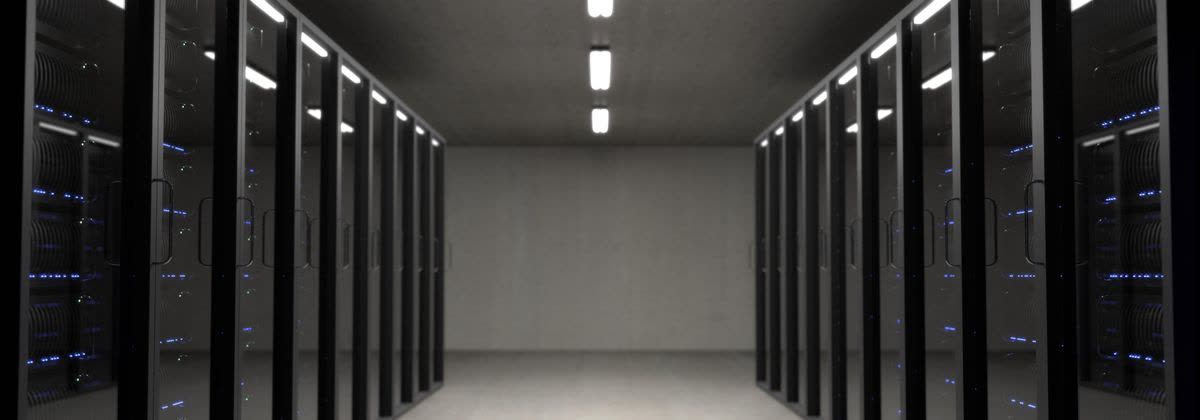
When AI puts a flawless poem, working Python code or a photorealistic image on our screen in a few seconds, we usually forget what lies behind the magic. Yet behind every query and every training cycle there is a massive megawatt load drawn from the socket, and an enormous power electronics battle that makes copper-wound transformers groan.
Watching the energy fields of The Matrix in pop culture, we thought it was a distant dystopia; but modern data centers have already started demanding as much electricity as a small country consumes. So as LLM reasoning models advance, how will power grids carry this load?
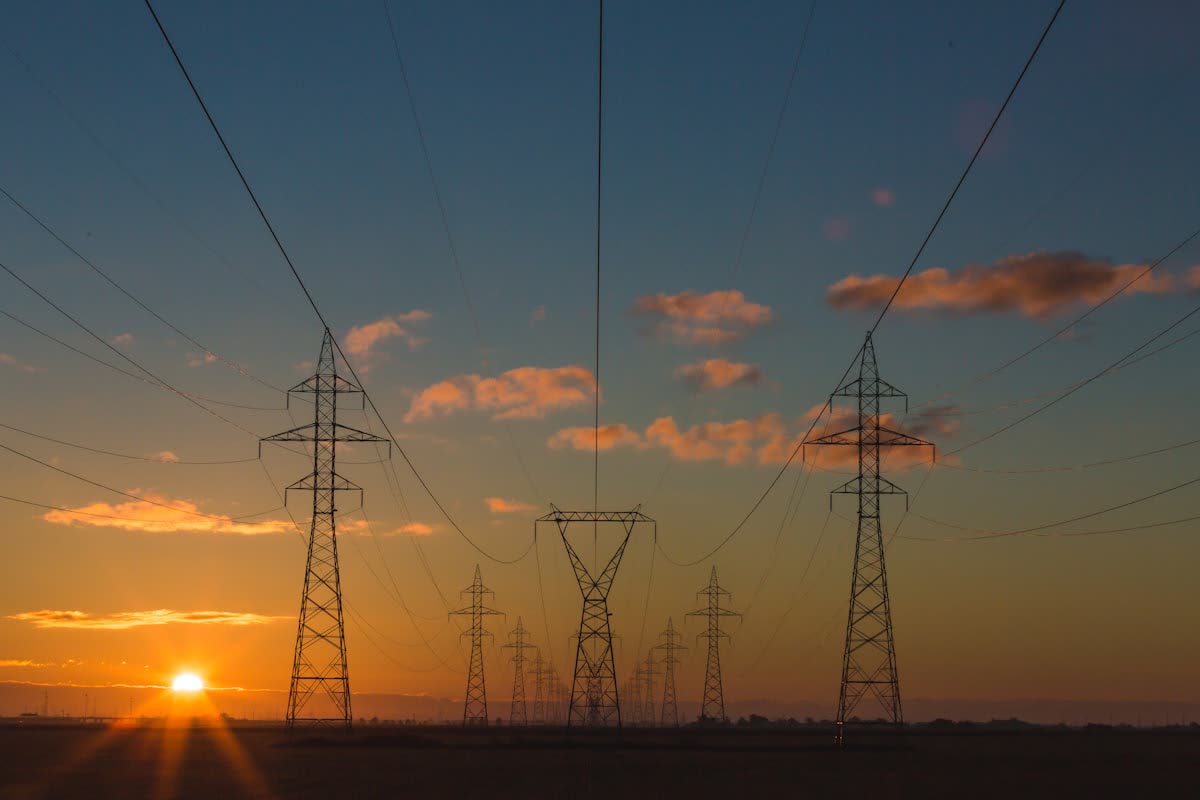
From high-voltage lines to silicon chips: the smart conversion of billions of watts of energy.
How Many Watts Is a Single Prompt?
A traditional Google search uses roughly 0.3 Wh of electricity on the server side. But when it comes to asking a generative AI model (LLM) a question, that figure jumps almost tenfold to around 2.9 Wh. When you consider millions of users querying these systems at the same time, the instantaneous reactive and active power load of a digital city is reflected onto the grid.
The model training phase, meanwhile, is industrial-scale power consumption in the truest sense. The electricity needed to train a massive parameter network like GPT-4 from scratch is measured on gigawatt-hour (GWh) scales, equivalent to the annual consumption of thousands of households.
"As the computing capacity of silicon chips grows, the real bottleneck we face isn't software; it's the maximum grid capacity that local substations can handle."
The Engineering Bottleneck: Current Density and Heat Transfer
From an electrical engineer's point of view, the problem isn't just the size of the bill. The high current ($I$) drawn by dozens of servers in a data center rack releases enormous heat along the conductor paths, as dictated by the $I^2 \cdot R$ formula.
Even though next-generation microchip architectures shrink transistor sizes, the thermal power density per unit area now rivals that of nuclear reactor cores. This has made traditional fan-based air cooling completely obsolete and turned dielectric liquid immersion cooling systems into a necessity.
- PUE (Power Usage Effectiveness): The ratio of total facility energy to the energy delivered to the servers. The goal is always to get as close to 1.0 as possible.
- Reactive Power Compensation: Advanced compensation panels used to balance the inductive load that massive power supplies draw from the grid.
- The Push for Nuclear and SMRs: Tech giants signing direct deals with small modular nuclear reactors (SMRs) for uninterrupted power.
The Grid Limit: Is Tech Turning to Nuclear Power?
Renewable sources like solar and wind may be green, but their intermittent nature (no sun at night, wind that dies down) means they can't provide baseload power for AI servers running at full load 24/7.
That is why giants such as Microsoft, Amazon and Google are signing bilateral power purchase agreements directly with nuclear plants and building the AI cluster hubs of the future integrated with their own dedicated substations.
Conclusion: Power Electronics Deserves as Much Attention as Algorithms
The AI revolution isn't just about programming languages and statistical models. For the code to run at all, the switched-mode power supplies (SMPS) that push voltage into the silicon, the busbar systems and the high-voltage transmission lines are every bit as vital.
The most valuable engineers of the future won't only be those who train AI; they will be the power electronics and energy specialists who efficiently manage the energy that feeds it.
Do you think AI models' appetite for energy can be met with nuclear power and microgrids, or will the energy crisis slow this growth down? We look forward to your engineering and technology perspectives in the comments!