Although driverless car technologies have been around for years, our dream of fully autonomous (Level 5) driving has never quite come true. The biggest reason was that the software forming the vehicle's brain was built in a "modular" way. For every reaction, from perception and mapping to route planning and braking, engineers had to write millions of lines of C++ code based on "If/Else" conditions. The result was clumsy systems that froze up, not knowing what to do, when a pedestrian suddenly stepped into the road.
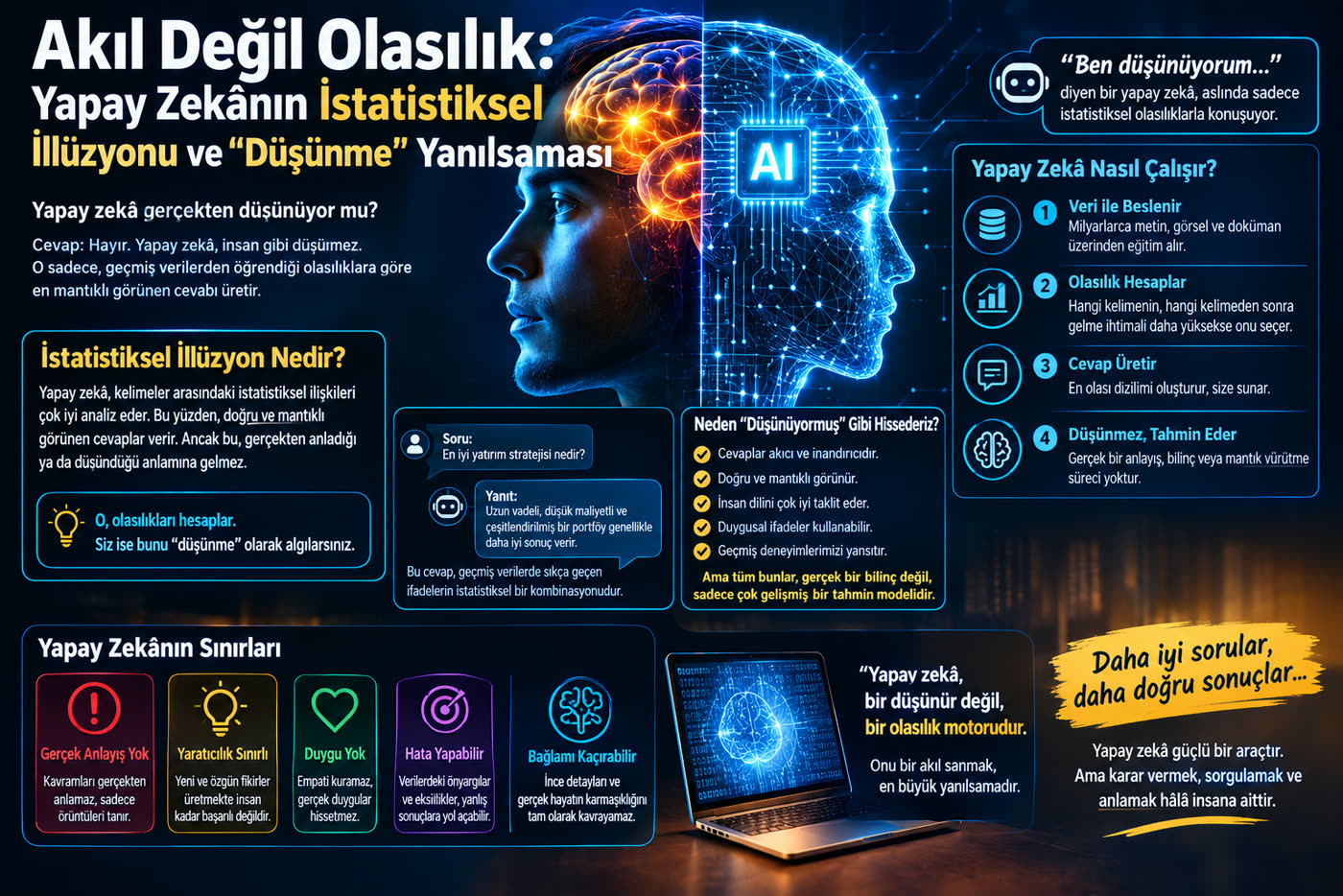
But the rules have changed. NVIDIA has thrown the traditional software architecture out entirely and opened the door to a new era in transportation: End-to-End AI. Pixels from the cameras now go straight into a giant neural network, and within seconds the system generates the steering or braking command on its own, without any human-written code. Let's take a close look, through an engineer's eyes, at the hardware beast behind this revolution that is turning cars into supercomputers on wheels, and at how it will change our lives.
In an end-to-end AI architecture, sensor data is not split into modules; it is processed directly in a single neural network built on the Transformer Engine.
The Beast Under the Hood: NVIDIA DRIVE Thor
End-to-end AI needs enormous compute power to work. The newest piece of silicon NVIDIA has built to carry this autonomous revolution is the DRIVE Thor chip. Carrying the DNA of the Blackwell and Grace architectures, this superchip has a hardware topology unlike anything seen before in the automotive industry.
- 1000 TOPS of Compute: DRIVE Thor reaches a capacity of 1000 tera (trillion) operations per second. This power, a full twice that of the earlier Orin chips, is vital for processing data from the 12 cameras, radar and LiDAR around the vehicle at the same time.
- Transformer Engine: The hardware architecture that trains large language models (LLMs) like ChatGPT is now inside the car. With 8-bit floating point (FP8) support, the Transformer Engine speeds up neural network decision-making threefold.
- Unified Architecture (Unified SoC): Cars used to have separate chips for the digital instrument cluster (cockpit), for driver assistance and for autonomous driving. Thor isolates all of these tasks on a single silicon die, cutting energy consumption (PUE) and eliminating system bottlenecks.
How Does End-to-End AI Work?
It is just like a person learning to drive. When you get behind the wheel, you don't think "an object is approaching at 5 metres per second, so according to the physics I should apply 2 bar of pressure to the brake." Your brain takes in the pixels (your eyes) and instantly turns them into a muscle response (your foot).
NVIDIA's end-to-end networks (models trained over millions of kilometres in Omniverse-based simulations) do exactly that. The car's camera captures the image, and the AI sends commands directly to the brake discs and the steering motor. There are no lines of code, decision trees or map synchronisation errors in between. In a chaotic situation the car has never encountered before (say, a load spilled across the road), this architecture lets it understand the situation and improvise a response instead of searching for a memorised piece of code.
What Will Change in Our Lives?
A hardware and software evolution on this scale brings with it a cultural revolution far bigger than just "taking our hands off the wheel":
- Cabins That Become Living Spaces: In-car infotainment systems will turn into game consoles and cinemas. While the car drives itself, you will be able to play games on 8K screens or join your virtual meetings.
- Accidents Brought Down to Zero: Average human reaction time is 0.25 seconds, while end-to-end AI responds within a thousandth of a second. Traffic accidents caused by fatigue, distraction or alcohol will be left to the history books.
- Personalised AI Assistants: The in-car AI (LLM-powered) will learn your driving habits. When you say "I'm really tired today," the car will understand, dim the interior lighting, adjust the climate control and take you home by the calmest route.
How do you feel about trusting your life to an AI that makes its own decisions instead of following billions of lines of code? Can end-to-end learning systems be as "intuitive" as a human? Let's discuss your views in the comments.